
ATG5 Recombinant Rabbit Monoclonal Antibody [SN73-07]


Overview
Product Name
ATG5 Recombinant Rabbit Monoclonal Antibody [SN73-07]
Antibody Type
Recombinant Rabbit monoclonal Antibody
Immunogen
Synthetic peptide within Human ATG5 aa 1-50 / 275.
Species Reactivity
Human, Mouse, Rat, Monkey
Validated Applications
WB, IF-Cell, IF-Tissue, IHC-P, IP, FC
Molecular Weight
Predicted band size: 32 kDa
Positive Control
NIH/3T3 cell lysate, C2C12 cell lysate, Neuro-2a cell lysate, PC-12 cell lysate, mouse brain tissue lysate, rat brain tissue lysate, HeLa cell lysate, A431 cell lysate, human brain tissue, NIH/3T3, PC-12.
Conjugation
unconjugated
Clone Number
SN73-07
RRID
Product Features
Form
Liquid
Concentration
Storage Instructions
Shipped at 4℃. Store at +4℃ short term (1-2 weeks). It is recommended to aliquot into single-use upon delivery. Store at -20℃ long term.
Storage Buffer
1*TBS (pH7.4), 0.05% BSA, 40% Glycerol. Preservative: 0.05% Sodium Azide.
Isotype
IgG
Purification Method
Protein A affinity purified.
Application Dilution
-
WB
-
1:5,000-1:10,000
-
IF-Cell
-
1:100-1:250
-
IF-Tissue
-
1:50-1:200
-
IHC-P
-
1:2,000
-
IP
-
1-2μg/sample
-
FC
-
1:1,000
Target
Function
Involved in autophagic vesicle formation. Conjugation with ATG12, through a ubiquitin-like conjugating system involving ATG7 as an E1-like activating enzyme and ATG10 as an E2-like conjugating enzyme, is essential for its function. The ATG12-ATG5 conjugate acts as an E3-like enzyme which is required for lipidation of ATG8 family proteins and their association to the vesicle membranes. Involved in mitochondrial quality control after oxidative damage, and in subsequent cellular longevity. Plays a critical role in multiple aspects of lymphocyte development and is essential for both B and T lymphocyte survival and proliferation. Required for optimal processing and presentation of antigens for MHC II. Involved in the maintenance of axon morphology and membrane structures, as well as in normal adipocyte differentiation. Promotes primary ciliogenesis through removal of OFD1 from centriolar satellites and degradation of IFT20 via the autophagic pathway.
Background References
1. He G et al. Gadd45b prevents autophagy and apoptosis against rat cerebral neuron oxygen-glucose deprivation/reperfusion injury. Apoptosis 21:390-403 (2016).
2. Pla A et al. TLR4 mediates the impairment of ubiquitin-proteasome and autophagy-lysosome pathways induced by ethanol treatment in brain. Cell Death Dis 5:e1066 (2014).
Sequence Similarity
Belongs to the ATG5 family.
Tissue Specificity
Ubiquitous. The mRNA is present at similar levels in viable and apoptotic cells, whereas the protein is dramatically highly expressed in apoptotic cells.
Post-translational Modification
Conjugated to ATG12; which is essential for autophagy, but is not required for association with isolation membrane.; Acetylated by EP300.
Subcellular Location
Cytoplasm, Membrane.
Synonyms
APG 5 antibody
APG 5L antibody
APG5 antibody
APG5 autophagy 5 like antibody
APG5 like antibody
APG5-like antibody
APG5L antibody
Apoptosis specific protein antibody
Apoptosis-specific protein antibody
ASP antibody
ExpandImages
-
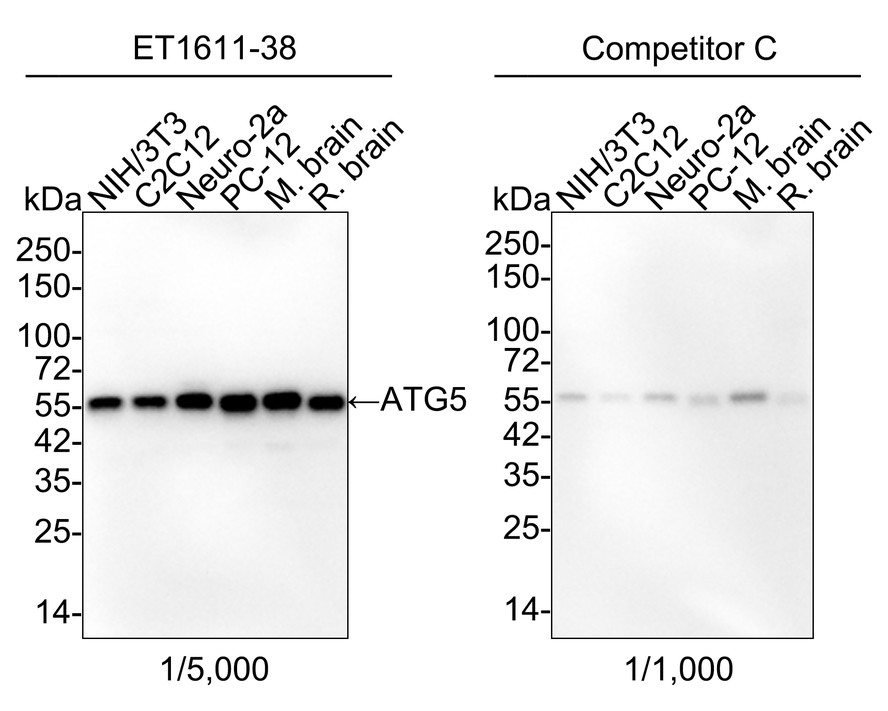
Western blot analysis of ATG5 on different lysates with Rabbit anti-ATG5 antibody (ET1611-38) at 1/5,000 dilution and competitor's antibody at 1/1,000 dilution.
Lane 1: NIH/3T3 cell lysate (15 µg/Lane)
Lane 2: C2C12 cell lysate (15 µg/Lane)
Lane 3: Neuro-2a cell lysate (15 µg/Lane)
Lane 4: PC-12 cell lysate (15 µg/Lane)
Lane 5: Mouse brain tissue lysate (15 µg/Lane)
Lane 6: Rat brain tissue lysate (15 µg/Lane)
Predicted band size: 32 kDa
Observed band size: 55 kDa
Exposure time: 35 seconds; ECL: K1802;
4-20% SDS-PAGE gel.
Proteins were transferred to a PVDF membrane and blocked with 5% NFDM/TBST for 1 hour at room temperature. The primary antibody (ET1611-38) at 1/5,000 dilution and competitor's antibody at 1/1,000 dilution were used in 5% NFDM/TBST at 4℃ overnight. Goat Anti-Rabbit IgG - HRP Secondary Antibody (HA1001) at 1/50,000 dilution was used for 1 hour at room temperature. -
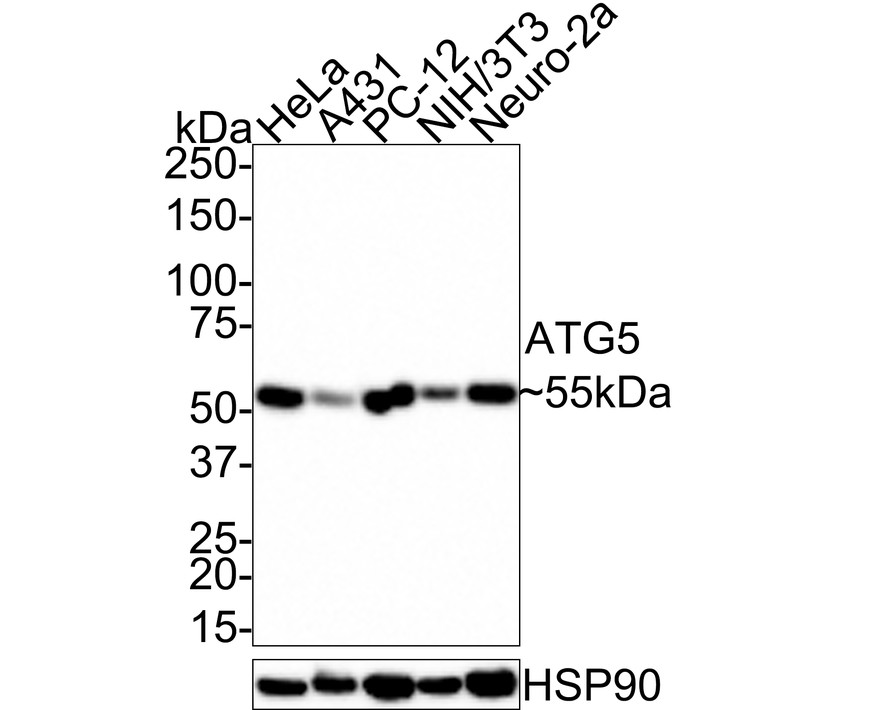
Western blot analysis of ATG5 on different lysates with Rabbit anti-ATG5 antibody (ET1611-38) at 1/5,000 dilution.
Lane 1: HeLa cell lysate (20 µg/Lane)
Lane 2: A431 cell lysate (20 µg/Lane)
Lane 3: PC-12 cell lysate (20 µg/Lane)
Lane 4: NIH/3T3 cell lysate (20 µg/Lane)
Lane 5: Neuro-2a cell lysate (20 µg/Lane)
Predicted band size: 32 kDa
Observed band size: 55 kDa
Exposure time: 1 minute; ECL: K1801;
4-20% SDS-PAGE gel.
Proteins were transferred to a PVDF membrane and blocked with 5% NFDM/TBST for 1 hour at room temperature. The primary antibody (ET1611-38) at 1/5,000 dilution was used in 5% NFDM/TBST at room temperature for 2 hours. Goat Anti-Rabbit IgG - HRP Secondary Antibody (HA1001) at 1/100,000 dilution was used for 1 hour at room temperature. -
![<span style="font-weight: bold;">☑ Knockout (KO)</span><br /><br />Western blot analysis of ATG5 with anti-ATG5 antibody [SN73-07] (<a href="/products/ET1611-38" style="font-weight: bold;text-decoration: underline;">ET1611-38</a>) at 1/1,000 dilution.<br /><br />Lane 1: Wild-type Huh7 whole cell lysate.<br />Lane 2: ATG5 knockout Huh7 whole cell lysate.<br /><br />Proteins were transferred to a PVDF membrane and blocked with 5% NFDM in TBST for 1 hour at room temperature. The primary Anti-ATG5 antibody (<a href="/products/ET1611-38" style="font-weight: bold;text-decoration: underline;">ET1611-38</a>, 1/1,000) and Anti-GAPDH antibody (<a href="/products/ET1601-4" style="font-weight: bold;text-decoration: underline;">ET1601-4</a>, 1/10,000) were used in 5% BSA at room temperature for 2 hours. Goat Anti-Rabbit IgG H&L (HRP) Secondary Antibody (<a href="/products/HA1001" style="font-weight: bold;text-decoration: underline;">HA1001</a>) at 1/200,000 dilution was used for 1 hour at room temperature.<br /><br />Cell lysate was provided by Ubigene Biosciences (Ubigene Biosciences Co., Ltd., Guangzhou, China).](https://storage.huabio.cn/huabio/productImg/ET1611-38_3.jpg?v=20250417091815)
☑ Knockout (KO)
Western blot analysis of ATG5 with anti-ATG5 antibody [SN73-07] (ET1611-38) at 1/1,000 dilution.
Lane 1: Wild-type Huh7 whole cell lysate.
Lane 2: ATG5 knockout Huh7 whole cell lysate.
Proteins were transferred to a PVDF membrane and blocked with 5% NFDM in TBST for 1 hour at room temperature. The primary Anti-ATG5 antibody (ET1611-38, 1/1,000) and Anti-GAPDH antibody (ET1601-4, 1/10,000) were used in 5% BSA at room temperature for 2 hours. Goat Anti-Rabbit IgG H&L (HRP) Secondary Antibody (HA1001) at 1/200,000 dilution was used for 1 hour at room temperature.
Cell lysate was provided by Ubigene Biosciences (Ubigene Biosciences Co., Ltd., Guangzhou, China). -
![<span style="font-weight: bold;">☑ Knockout (KO)</span><br /><br />Western blot analysis of ATG5 with anti-ATG5 antibody [SN73-07] (<a href="/products/ET1611-38" style="font-weight: bold;text-decoration: underline;">ET1611-38</a>) at 1/1,000 dilution.<br /><br />Lane 1: Wild-type Vero-E6 whole cell lysate.<br />Lane 2: ATG5 knockout Vero-E6 whole cell lysate.<br /><br />Proteins were transferred to a PVDF membrane and blocked with 5% NFDM in TBST for 1 hour at room temperature. The primary Anti-ATG5 antibody (<a href="/products/ET1611-38" style="font-weight: bold;text-decoration: underline;">ET1611-38</a>, 1/1,000) and Anti-GAPDH antibody (<a href="/products/ET1601-4" style="font-weight: bold;text-decoration: underline;">ET1601-4</a>, 1/10,000) were used in 5% BSA at room temperature for 2 hours. Goat Anti-Rabbit IgG H&L (HRP) Secondary Antibody (<a href="/products/HA1001" style="font-weight: bold;text-decoration: underline;">HA1001</a>) at 1/200,000 dilution was used for 1 hour at room temperature.<br /><br />Cell lysate was provided by Ubigene Biosciences (Ubigene Biosciences Co., Ltd., Guangzhou, China).](https://storage.huabio.cn/huabio/productImg/ET1611-38_4.jpg?v=20250417091835)
☑ Knockout (KO)
Western blot analysis of ATG5 with anti-ATG5 antibody [SN73-07] (ET1611-38) at 1/1,000 dilution.
Lane 1: Wild-type Vero-E6 whole cell lysate.
Lane 2: ATG5 knockout Vero-E6 whole cell lysate.
Proteins were transferred to a PVDF membrane and blocked with 5% NFDM in TBST for 1 hour at room temperature. The primary Anti-ATG5 antibody (ET1611-38, 1/1,000) and Anti-GAPDH antibody (ET1601-4, 1/10,000) were used in 5% BSA at room temperature for 2 hours. Goat Anti-Rabbit IgG H&L (HRP) Secondary Antibody (HA1001) at 1/200,000 dilution was used for 1 hour at room temperature.
Cell lysate was provided by Ubigene Biosciences (Ubigene Biosciences Co., Ltd., Guangzhou, China). -
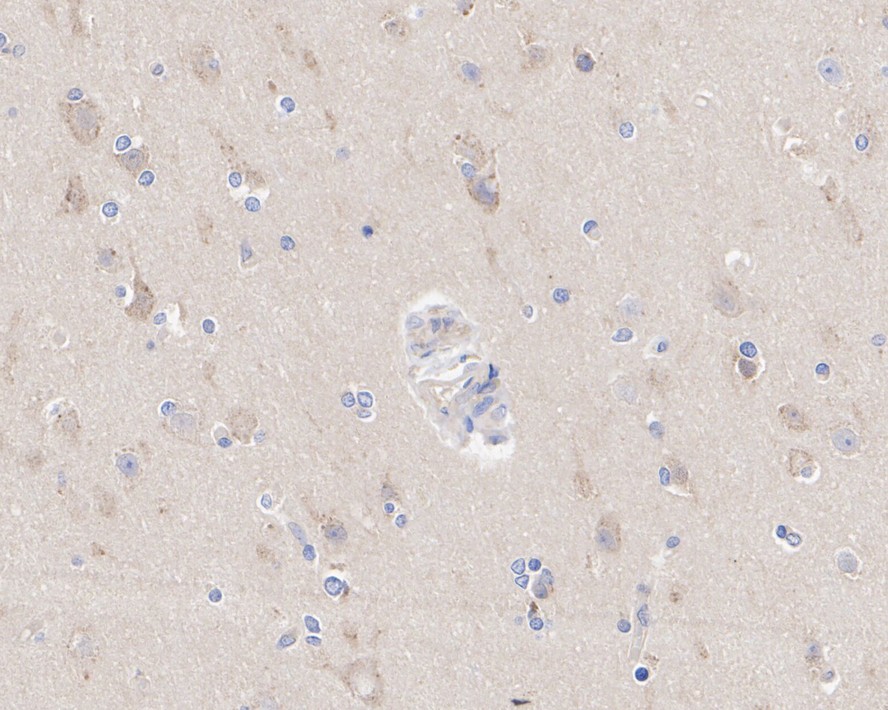
Immunohistochemical analysis of paraffin-embedded human brain tissue with Rabbit anti-ATG5 antibody (ET1611-38) at 1/2,000 dilution.
The section was pre-treated using heat mediated antigen retrieval with Tris-EDTA buffer (pH 9.0) for 20 minutes. The tissues were blocked in 1% BSA for 20 minutes at room temperature, washed with ddH2O and PBS, and then probed with the primary antibody (ET1611-38) at 1/2,000 dilution for 1 hour at room temperature. The detection was performed using an HRP conjugated compact polymer system. DAB was used as the chromogen. Tissues were counterstained with hematoxylin and mounted with DPX. -
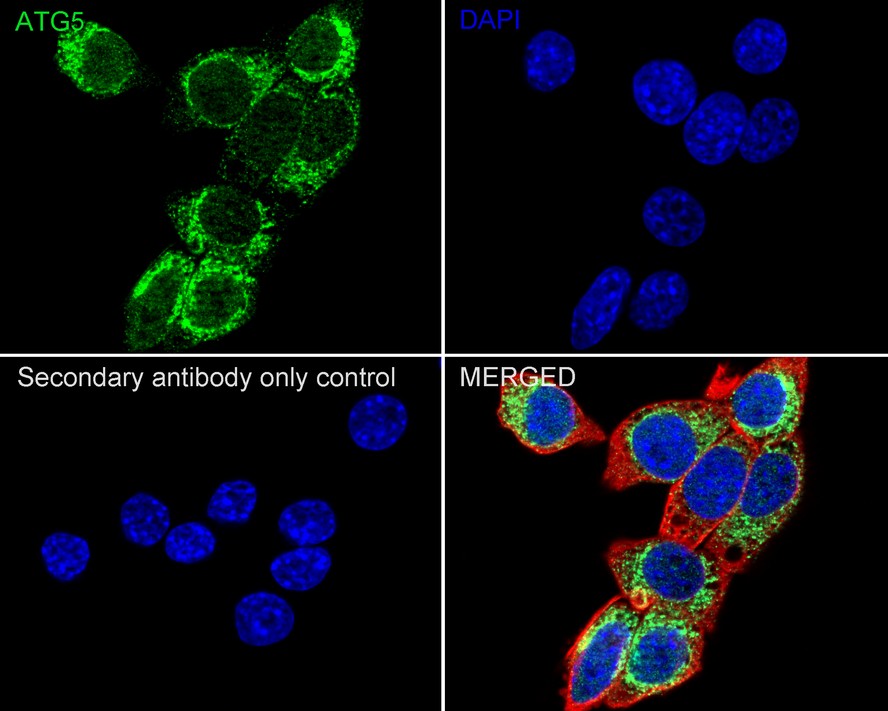
Immunocytochemistry analysis of NIH/3T3 cells labeling ATG5 with Rabbit anti-ATG5 antibody (ET1611-38) at 1/250 dilution.
Cells were fixed in 4% paraformaldehyde for 20 minutes at room temperature, permeabilized with 0.1% Triton X-100 in PBS for 5 minutes at room temperature, then blocked with 1% BSA in 10% negative goat serum for 1 hour at room temperature. Cells were then incubated with Rabbit anti-ATG5 antibody (ET1611-38) at 1/250 dilution in 1% BSA in PBST overnight at 4 ℃. Goat Anti-Rabbit IgG H&L (iFluor™ 488, HA1121) was used as the secondary antibody at 1/1,000 dilution. PBS instead of the primary antibody was used as the secondary antibody only control. Nuclear DNA was labelled in blue with DAPI. Beta tubulin (M1305-2, red) was stained at 1/100 dilution overnight at +4℃. Goat Anti-Mouse IgG H&L (iFluor™ 594, HA1126) was used as the secondary antibody at 1/1,000 dilution. -
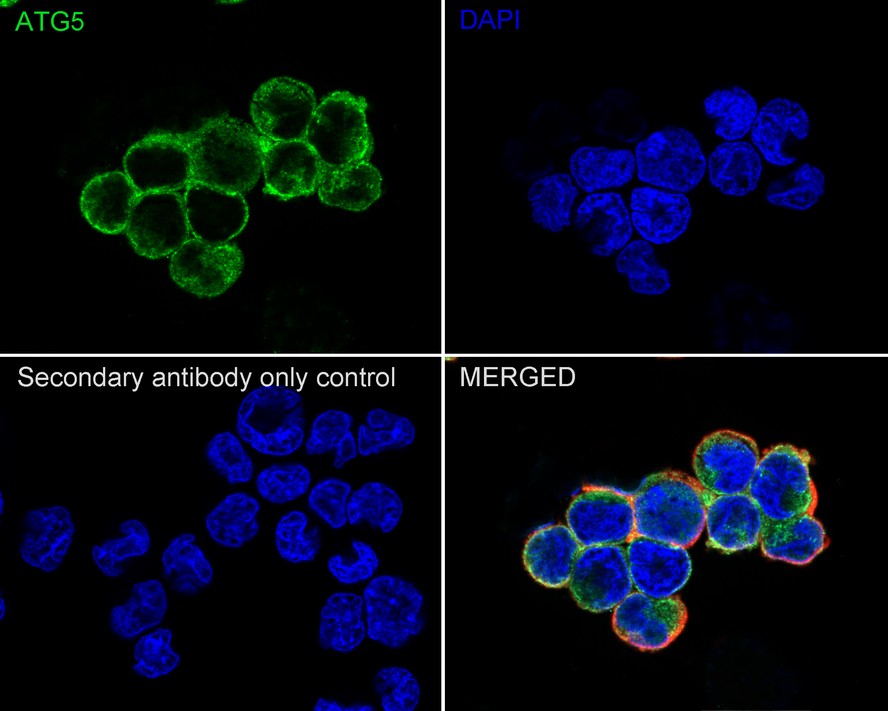
Immunocytochemistry analysis of PC-12 cells labeling ATG5 with Rabbit anti-ATG5 antibody (ET1611-38) at 1/100 dilution.
Cells were fixed in 4% paraformaldehyde for 20 minutes at room temperature, permeabilized with 0.1% Triton X-100 in PBS for 5 minutes at room temperature, then blocked with 1% BSA in 10% negative goat serum for 1 hour at room temperature. Cells were then incubated with Rabbit anti-ATG5 antibody (ET1611-38) at 1/100 dilution in 1% BSA in PBST overnight at 4 ℃. Goat Anti-Rabbit IgG H&L (iFluor™ 488, HA1121) was used as the secondary antibody at 1/1,000 dilution. PBS instead of the primary antibody was used as the secondary antibody only control. Nuclear DNA was labelled in blue with DAPI. Beta tubulin (M1305-2, red) was stained at 1/100 dilution overnight at +4℃. Goat Anti-Mouse IgG H&L (iFluor™ 594, HA1126) was used as the secondary antibody at 1/1,000 dilution. -
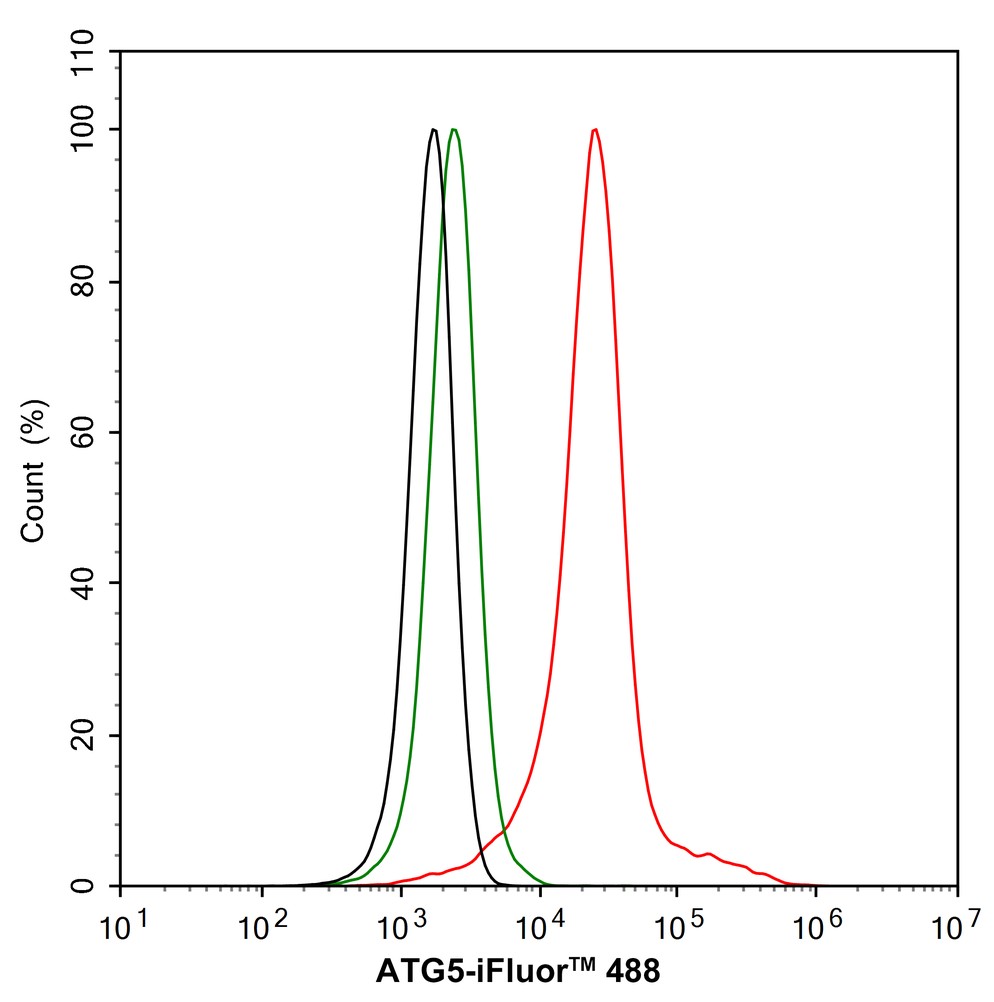
Flow cytometric analysis of NIH/3T3 cells labeling ATG5.
Cells were fixed and permeabilized. Then stained with the primary antibody (ET1611-38, 1/1,000) (red) compared with Rabbit IgG Isotype Control (green). After incubation of the primary antibody at +4℃ for an hour, the cells were stained with a iFluor™ 488 conjugate-Goat anti-Rabbit IgG Secondary antibody (HA1121) at 1/1,000 dilution for 30 minutes at +4℃. Unlabelled sample was used as a control (cells without incubation with primary antibody; black). -
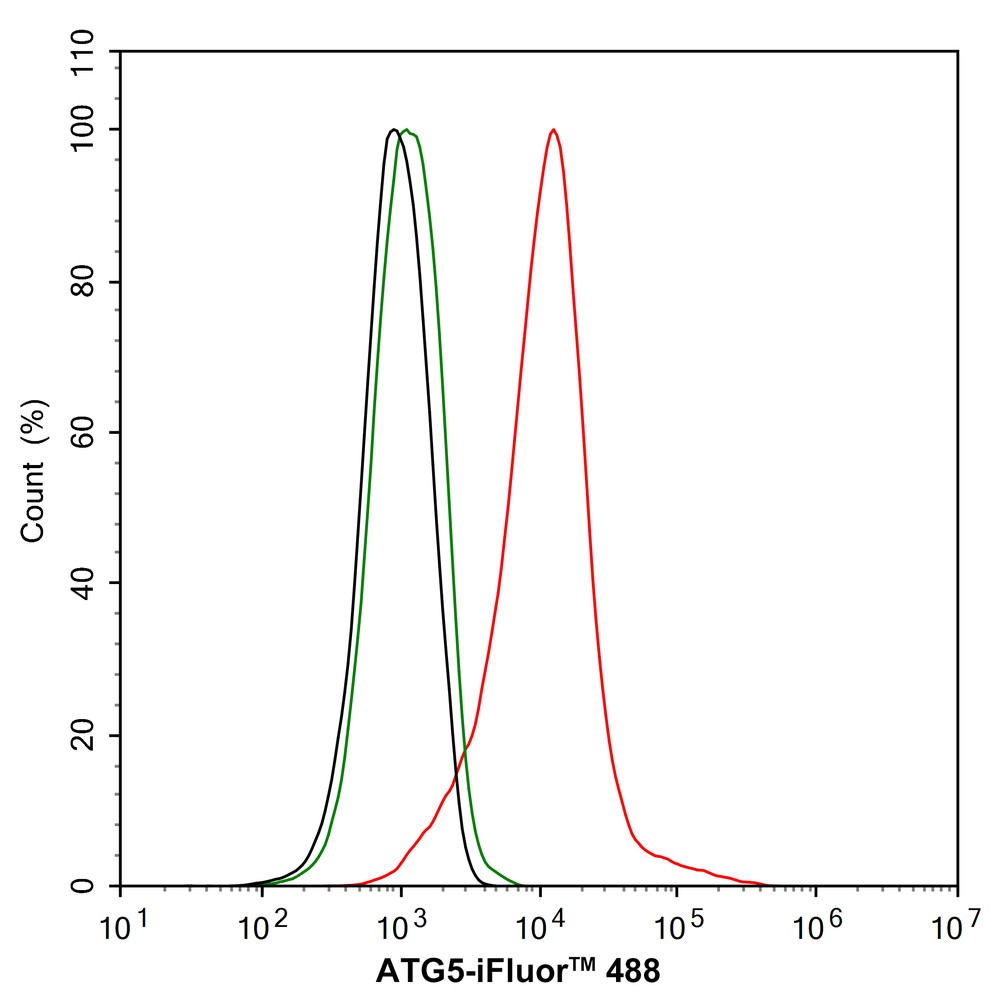
Flow cytometric analysis of PC-12 cells labeling ATG5.
Cells were fixed and permeabilized. Then stained with the primary antibody (ET1611-38, 1/1,000) (red) compared with Rabbit IgG Isotype Control (green). After incubation of the primary antibody at +4℃ for an hour, the cells were stained with a iFluor™ 488 conjugate-Goat anti-Rabbit IgG Secondary antibody (HA1121) at 1/1,000 dilution for 30 minutes at +4℃. Unlabelled sample was used as a control (cells without incubation with primary antibody; black). -

ATG5 was immunoprecipitated in 0.2mg HeLa cell lysate with ET1611-38 at 2 µg/10 µl beads. Western blot was performed from the immunoprecipitate using ET1611-38 at 1/2,000 dilution. Anti-Rabbit IgG for IP Nano-secondary antibody (NBI01H) at 1/5,000 dilution was used for 1 hour at room temperature.
Lane 1: HeLa cell lysate (input)
Lane 2: Rabbit IgG instead of ET1611-38 in HeLa cell lysate
Lane 3: ET1611-38 IP in HeLa cell lysate
Blocking/Dilution buffer: 5% NFDM/TBST
Exposure time: 1 minute 21 seconds; ECL: K1802
Please note: All products are "FOR RESEARCH USE ONLY AND ARE NOT INTENDED FOR DIAGNOSTIC OR THERAPEUTIC USE"
Citation
-
Ginkgolic acid targets HSPA8 to trigger ferroptosis in hepatocellular carcinoma via chaperone-mediated autophagy-dependent GPX4 degradation
Journal: Pharmaceutical Biology
DOI: 10.1080/13880209.2026.2646350
IF: 4.8
Application: WB
Reactivity: Human
Publish date: 2026 Mar
-
UBA1 promotes cardiac hypertrophy by suppressing autophagy via targeting ATG5 for ubiquitination
Journal: Cell Communication And Signaling
DOI: 10.1186/s12964-026-02761-y
IF: 8.9
Application: WB,IP
Reactivity: Mouse,Rat
Publish date: 2026 Mar
-
Inhibition of Cathepsin B protects against vandetanib-induced hepato-cardiotoxicity by restoring lysosomal damage
Journal: International Journal Of Biological Sciences
DOI: 10.7150/ijbs.122904
IF: 10
Application: WB
Reactivity: Human
Publish date: 2026 Jan
-
Quercetin alleviates imatinib-induced premature ovarian insufficiency by regulating mitophagy via the ROS/JNK/c-JUN pathway
Journal: International Immunopharmacology
DOI: 10.1016/j.intimp.2026.116405
IF: 4.7
Application: WB
Reactivity: Mouse,Human
Publish date: 2026 Feb
-
Entrectinib binds to HMGB1 and activates cardiomyocyte autophagy by inhibiting OTUD5-MTORC1 signaling to induce cardiotoxicity
Journal: Autophagy
DOI: 10.1080/15548627.2025.2576619
IF: 14.3
Application: WB
Reactivity: Human
Publish date: 2025 Oct
-
Branched-chain amino acids induce hyperammonemia via gut-liver axis-mediated ammonia overproduction in laying hens
Journal: Animal Nutrition
DOI: 10.1016/j.aninu.2025.03.012
IF: 6.1
Application: WB
Reactivity: Chicken
Publish date: 2025 May
-
Estrogen promotes autophagy in the mammary epithelial cells of dairy sheep via the CXCL12/CXCR4 axis
Journal: Journal of Animal Science
DOI: 10.1093/jas/skaf064
IF: 2.7
Application: WB
Reactivity: Sheep
Publish date: 2025 May
-
SIRT5-mediated desuccinylation of the porcine deltacoronavirus M protein drives pexophagy to enhance viral proliferation
Journal: PLoS Pathogens
DOI: 10.1371/journal.ppat.1013163
IF: 5.5
Application: WB
Reactivity: Human,Pig
Publish date: 2025 May
-
Assembling Ruthenium Complexes to Form Ruthenosome Unleashing Ferritinophagy-Mediated Tumor Suppression
Journal: ACS Applied Nano Materials
DOI: 10.1021/acsnano.4c17344
IF: 15.8
Application: WB
Reactivity: Human
Publish date: 2025 Mar
-
API5 Phosphorylation Promotes Antiviral Immunity by Inhibiting Degradation of Cytosolic RNA Sensor RLRs
Journal: Advanced Science
DOI: 10.1002/advs.202505479
IF: 14.1
Application: WB
Reactivity: Human
Publish date: 2025 Jul
-
LAPTM5 Confers the Resistance to Venetoclax via Promoting the Autophagosome-Lysosome Fusion in Multiple Myeloma
Journal: JOURNAL OF CELLULAR AND MOLECULAR MEDICINE
DOI: 10.1111/jcmm.70331
IF: 4.2
Application: WB
Reactivity: Human
Publish date: 2025 Jan
-
LAPTM5 Confers the Resistance to Venetoclax via Promoting the Autophagosome-Lysosome Fusion in Multiple Myeloma
Journal: Journal Of Cellular And Molecular Medicine
DOI:
IF: 4.3
Application: WB
Reactivity: Human
Publish date: 2025 Jan
-
Visualizing bulk autophagy in vivo by tagging endogenous LC3B
Journal: Autophagy
DOI: 10.1080/15548627.2025.2457910
IF: 14.6
Application: WB
Reactivity: Mouse
Publish date: 2025 Feb
-
USP38 regulates autophagy-dependent ferroptosis by deubiquitinating CTNNB1 in melanoma
Journal: International Journal Of Biological Macromolecules
DOI: 10.1016/j.ijbiomac.2025.149611
IF: 8.5
Application: WB
Reactivity: Human
Publish date: 2025 Dec
-
Traditional Chinese Medicinal Leech Induces Apoptosis and Autophagy in Glioblastoma by SGK1/Caspase‐3 and PI3K/AKT/mTOR Pathway
Journal: CNS Neuroscience & Therapeutics
DOI: 10.1002/cns.70683
IF: 5
Application: WB
Reactivity: Mouse,Human
Publish date: 2025 Dec
-
Heat shock protein A1L restricts influenza A virus by ubiquitination of NA
Journal: Journal Of Virology
DOI: 10.1128/jvi.00771-25
IF: 3.8
Application: WB
Reactivity: Human
Publish date: 2025 Aug
-
Bmal1 upregulates ATG5 expression to promote autophagy in skin cutaneous melanoma
Journal: Cellular Signalling
DOI:
IF: 4.4
Application: WB
Reactivity: Human
Publish date: 2024 Oct
-
RPGR is a guanine nucleotide exchange factor for the small GTPase RAB37 required for retinal function via autophagy regulation
Journal: Cell Reports
DOI:
IF: 8.8
Application: WB
Reactivity: Human
Publish date: 2024 Mar
-
Impaired autophagic flux in the human brain after traumatic brain injury
Journal: Neurotrauma Report
DOI:
IF: 1.7
Application: WB,IHC-P
Reactivity: Human
Publish date: 2024 Mar
-
Peptidyl-prolyl isomerase F as a prognostic biomarker associated with immune infiltrates and mitophagy in lung adenocarcinoma
Journal: Translational Lung Cancer Research
DOI: 10.21037/tlcr-24-344
IF: 4
Application: WB
Reactivity: Human
Publish date: 2024 Jun
-
Obesity induced caveolin-1 impairs osteogenesis via activating mitophagy and inhibiting Sirt1 signaling
Journal: Bone
DOI:
IF: 4.1
Application: WB
Reactivity: Mouse
Publish date: 2024 Jun
-
Short-chain fatty acids mitigate Methamphetamine-induced hepatic injuries in a Sigma-1 receptor-dependent manner
Journal: Ecotoxicology And Environmental Safety
DOI:
IF: 6.8
Application: WB
Reactivity: Mouse
Publish date: 2024 Jun
-
Hyperuricemia Induces Reproductive Damage in Male Rats through Zinc Homeostasis Imbalance and Oxidative Stress
Journal: Andrology
DOI:
IF: 2.5
Application: WB
Reactivity: Rat
Publish date: 2024 Jan
-
Exosomal miR-4645-5p from hypoxic bone marrow mesenchymal stem cells facilitates diabetic wound healing by restoring keratinocyte autophagy
Journal: Burns & Trauma
DOI:
IF: 5.3
Application: WB,IF
Reactivity: Mouse
Publish date: 2024 Jan
-
Hyperacetylated microtubules assist porcine deltacoronavirus nsp8 to degrade MDA5 via SQSTM1/p62-dependent selective autophagy
Journal: Journal Of Virology
DOI:
IF: 5.4
Application: WB
Reactivity: Pig
Publish date: 2024 Feb
-
Ferritin was involved in interleukin-17A enhanced osteogenesis through autophagy activation
Journal: International Immunopharmacology
DOI: 10.1016/j.intimp.2023.110916
IF: 5.6
Application: WB
Reactivity: Mouse
Publish date: 2023 Sept
-
Inhibition of PRKAA/AMPK (Ser485/491) phosphorylation by crizotinib induces cardiotoxicity via perturbing autophagosome-lysosome fusion
Journal: Autophagy
DOI: 10.1080/15548627.2023.2259216
IF: 13.3
Application: WB
Reactivity: Human,Mouse
Publish date: 2023 Oct
-
Integrative transcriptomic and network pharmacology analysis reveals the neuroprotective role of BYHWD through enhancing autophagy by inhibiting Ctsb in intracerebral hemorrhage mice
Journal: Chinese Medicine
DOI:
IF: 4.9
Application: WB
Reactivity: Mouse
Publish date: 2023 Nov
-
TRIM45 aggravates microglia pyroptosis via Atg5/NLRP3 axis in septic encephalopathy
Journal: Journal Of Neuroinflammation
DOI: 10.1186/s12974-023-02959-8
IF: 9.3
Application: WB
Reactivity: Mouse
Publish date: 2023 Nov
-
Wei-Tong-Xin ameliorated cisplatin-induced mitophagy and apoptosis in gastric antral mucosa by activating the Nrf2/HO-1 pathway
Journal: Journal Of Ethnopharmacology
DOI:
IF: 5.4
Application: WB
Reactivity: Mouse
Publish date: 2023 May
-
Chloroquine Intervenes Nephrotoxicity of Nilotinib through Deubiquitinase USP13‐Mediated Stabilization of Bcl‐XL
Journal: Advanced Science
DOI:
IF: 15.1
Application: WB
Reactivity: Human
Publish date: 2023 Jul
-
Porcine reproductive and respiratory syndrome virus degrades DDX10 via SQSTM1/p62-dependent selective autophagy to antagonize its antiviral activity
Journal: Autophagy
DOI: 10.1080/15548627.2023.2179844
IF: 13.3
Application: WB
Reactivity: Human
Publish date: 2023 Feb
-
3-Bromopyruvate overcomes cetuximab resistance in human colorectal cancer cells by inducing autophagy-dependent ferroptosis
Journal: Cancer Gene Therapy
DOI:
IF: 6.4
Application: WB
Reactivity: Human,Mouse
Publish date: 2023 Aug
-
TRAF6 autophagic degradation by avibirnavirus VP3 inhibits antiviral innate immunity via blocking NFKB/NF-κB activation
Journal: Autophagy
DOI:
IF: 16.016
Application: WB
Reactivity: Chicken
Publish date: 2022 Mar
-
Interleukin-17 promotes osteoclastogenesis and periodontal damage via autophagy in vitro and in vivo
Journal: International Immunopharmacology
DOI:
IF: 5.6
Application: WB
Reactivity: Mouse
Publish date: 2022 Jun
-
Bone marrow mesenchymal stem cells facilitate diabetic wound healing through the restoration of epidermal cell autophagy via the HIF-1α/TGF-β1/SMAD pathway
Journal: Stem Cell Research & Therapy
DOI:
IF: 8.079
Application: WB,IF
Reactivity: Human
Publish date: 2022 Jul
-
Fluid Shear Stress Regulates Osteogenic Differentiation via AnnexinA6-Mediated Autophagy in MC3T3-E1 Cells
Journal: International Journal Of Molecular Sciences
DOI:
IF: 6.208
Application: WB
Reactivity: Human
Publish date: 2022 Dec
-
Methamphetamine Disturbs Gut Homeostasis and Reshapes Serum Metabolome, Inducing Neurotoxicity and Abnormal Behaviors in Mice
Journal: Frontiers In Microbiology
DOI:
IF: 5.640
Application: WB
Reactivity: Mouse
Publish date: 2022 Apr
-
The Disulfiram/Copper Complex Induces Autophagic Cell Death in Colorectal Cancer by Targeting ULK1
Journal: Frontiers In Pharmacology
DOI:
IF: 5.810
Application: WB
Reactivity: Human
Publish date: 2021 Nov
-
Luteolin Alleviates Methamphetamine-Induced Hepatotoxicity by Suppressing the p53 Pathway-Mediated Apoptosis, Autophagy, and Inflammation in Rats
Journal: Frontiers In Pharmacology
DOI: 10.3389/fphar.2021.641917
IF: 5.811
Application: WB
Reactivity: Rat
Publish date: 2021 Feb
-
Autophagy‐Sirt3 axis decelerates hematopoietic aging
Journal: Aging Cell
DOI:
IF: 7.238
Application: WB
Reactivity: Mouse
Publish date: 2020 Oct
-
Luteolin alleviates methamphetamine-induced neurotoxicity by suppressing PI3K/Akt pathway-modulated apoptosis and autophagy in rats
Journal: Food And Chemical Toxicology
DOI:
IF: 4.68
Application: WB
Reactivity: Rat
Publish date: 2020 Mar
-
Autophagy negative-regulating Wnt signaling enhanced inflammatoryosteoclastogenesis from Pre-OCsin vitro
Journal: Biomedicine & Pharmacotherapy
DOI:
IF: 3.743
Application: WB
Reactivity: Human
Publish date: 2020 Jun
-
Escalating dose-multiple binge methamphetamine treatment elicits neurotoxicity, altering gut microbiota and fecal metabolites in mice
Journal: Food And Chemical Toxicology
DOI: 10.1016/j.fct.2020.111946
IF: 4.679
Application: WB
Reactivity: Mouse
Publish date: 2020 Dec
-
Exopolysaccharide from Cryptococcus heimaeyensis S20 induces autophagic cell death in non-small cell lung cancer cells via ROS/p38 and ROS/ERK signalling
Journal: Cell Proliferation
DOI:
IF: 5.753
Application: WB
Reactivity: Human
Publish date: 2020 Aug
-
Sinomenine attenuates septic‐associated lung injury through the Nrf2‐Keap1 and autophagy
Journal: Journal Of Pharmacy And Pharmacology
DOI:
IF: 2.39
Application: WB
Reactivity: Mouse
Publish date: 2019 Feb
-
Water Extract of Sporoderm-Broken Spores of Ganoderma lucidum Induces Osteosarcoma Apoptosis and Restricts Autophagic Flux
Journal: Oncotargets And Therapy
DOI:
IF: 3.046
Application: WB,IHC-P
Reactivity: Mouse
Publish date: 2019 Dec
-
RAB37 interacts directly with ATG5 and promotes autophagosome formation via regulating ATG5-12-16 complex assembly
Journal: Cell Death & Differentiation
DOI: 10.1038/s41418-017-0023-1
IF: 8.339
Application: WB
Reactivity: Human,Monkey
Publish date: 2017 Dec
Products with the same target and pathway
